11
Workspace files
VaultAI includes more than application code. This WorkspaceData layer packages Figma-ready design specs, Notion-ready transaction documents, source-backed customer research, and a public hash manifest that lets acquirers verify the surrounding operating context.
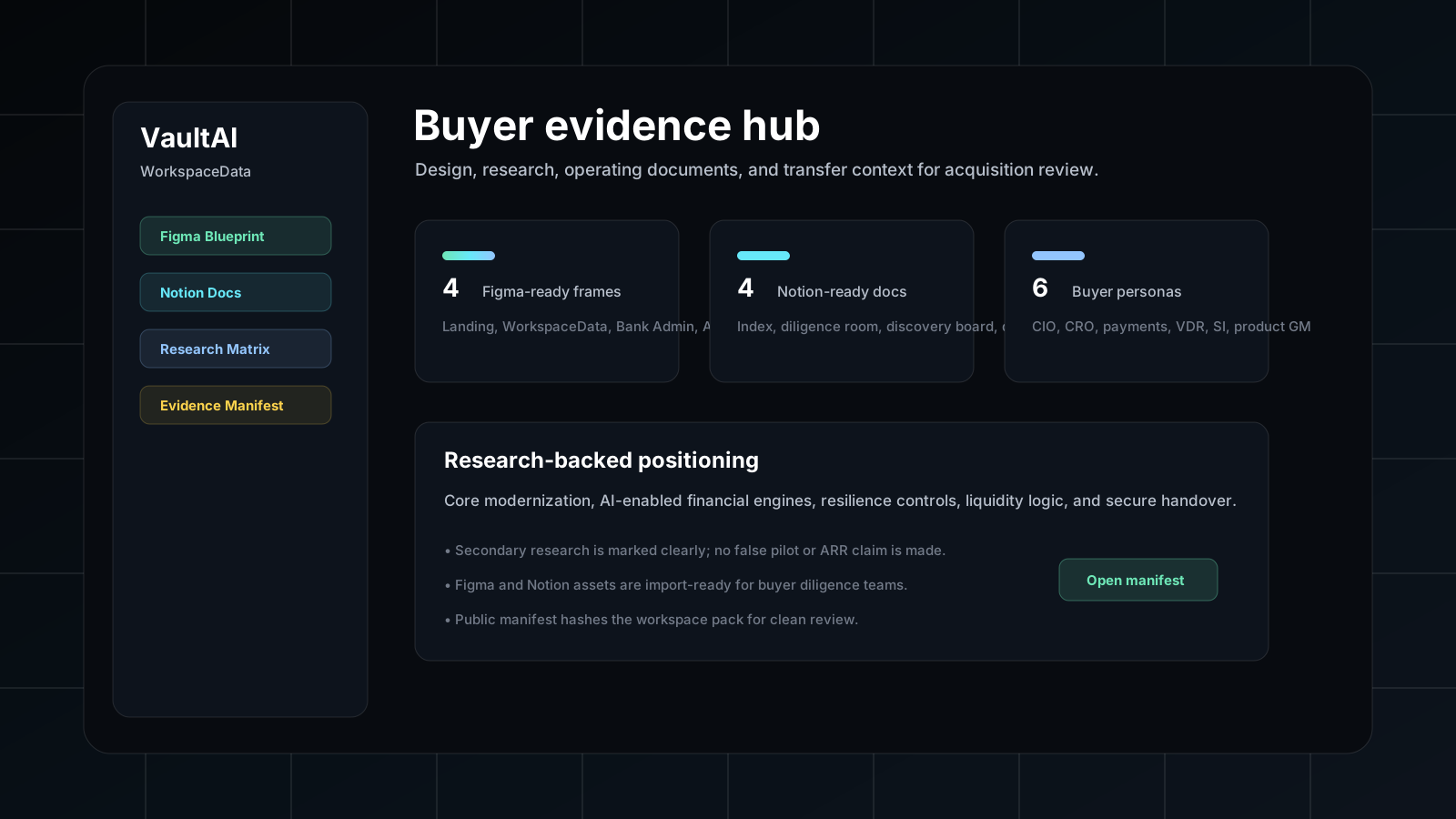
Includes design tokens, a Figma file blueprint, screen specifications, and a board preview that can be recreated inside Figma without exposing source code.
Includes a buyer diligence workspace, customer discovery board, product requirements, demo script, and importable Markdown pages for transaction review.
Maps enterprise buyer personas to real market pressures and source-backed customer pain without claiming revenue, pilots, or regulatory certification.
Every WorkspaceData file is hashed and rolled into a public master root so buyers can compare public evidence against later NDA-gated review materials.
Each artifact is hashed in the WorkspaceData manifest. The files are public-facing by design and do not expose credentials or NDA-gated source code.
Gives acquirers a ready UI blueprint: tokens, screen specifications, frame map, and design-board preview.
Gives buyers a clean operating room for diligence, VDR review, discovery planning, and demo execution.
Maps buyer personas and objections to real market sources without overstating revenue, pilots, or certifications.
The research pack is explicitly labeled as secondary research. It gives buyers a credible path for validating demand without falsely presenting signed pilots or customer revenue.
Legacy integration risk, undocumented customization, scarce core engineering talent.
Shadow-ledger migration evidence, deterministic controls, API-first review surface.
Need auditable ICT controls, operational evidence, and incident-response clarity.
Audit logs, resilience test surfaces, evidence API, WORM-style provenance.
Batch reconciliation, retry ambiguity, dispute triage delays.
Idempotent transaction API, journal entry views, signed webhooks.
Need defensible source-tied AI outputs for deal teams.
Document intelligence, cited extraction, VDR surfaces, acquisition page.
Need portable assets and evidence before entering bank procurement.
Docker, Terraform, Kubernetes, schema assets, DR playbook, Notion handover docs.
Long R&D cycle and expensive senior engineering hiring.
Design system, source manifest, VDR, demo routes, customer research pack.
The source register keeps customer-facing claims grounded in public evidence. It also makes the limitations clear: this pack supports diligence preparation, not a completed bank procurement process.
Core banking modernization pressure, integration risk, undocumented customization, and replacement-cost framing.
AI-enabled financial engines, real-time/event-driven processing, zero-trust resilience, and core decision-flow modernization.
Liquidity stress framing and high-quality liquid asset review concepts.
ICT risk management, operational resilience, testing, and third-party ICT risk context.
Cyber resilience, recovery objectives, FMI operational risk, and settlement finality context.